The launch
On 15 September 2026 Odyssey unveiled Odyssey-3 from the company account, its third foundation world model release of the year.
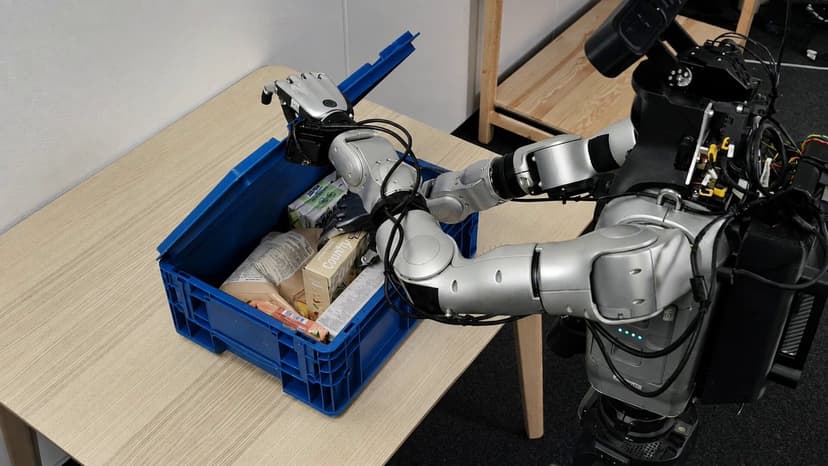
The post makes one claim, that this is a big step forward for foundation world models, and then lists six things the model can do: control robots, power humanoids, drive cars on the roads of India, train AIs, pilot drones, play video games. The video runs 97 seconds and shows each of them.
Nothing in the post asks a reader to understand what a world model is. It shows the model doing jobs the reader already understands.
That is the packaging decision that decides how far a technical launch travels past the people who already follow the field, and it is the opposite of the April launch, which led with a claim about physical accuracy and travelled among people who knew what that meant.
Doomers ran the launch window. The package was settled before the day, the first hour was planned rather than hoped for, and the accounts whose audiences overlap robotics and AI research were reading the post before anyone else.
What that involves is on the services page, and the playbook is the six stages every launch we run goes through.
The numbers
| Measure | Odyssey-3 |
|---|---|
| Views on the launch post | 2,329,668 |
| Likes | 4,458 |
| Reposts | 547 |
| Bookmarks | 2,162 |
| Reach against the account's following | 54 times |
| Rank among the launches we track | 388 of 1978 |
| Saves per 10,000 views | 9.3 |
| Reposts per million views | 235 |
Read the last two rows against the directory baselines in the Q3 report: a median of 12 saves per 10,000 views and 251 reposts per million.
Views are the number the ranker controls. Saves and reposts are the numbers people control, and on a launch aimed at robotics teams and researchers they are the ones that turn into conversations.
Against Odyssey's own year

| Launch | Views | Reposts per million | Saves per 10K |
|---|---|---|---|
| Odyssey-2 Max, 21 Apr | 2.2M | 164 | 16.6 |
| Agora-1, 18 May | 919K | 161 | 8.0 |
| $310M Series B, 17 Jun | 488K | 355 | 7.7 |
| Odyssey-3, 15 Sep | 2.3M | 235 | 9.3 |
Odyssey is one of the companies in the directory that launched more than once this year, and the pattern across all of them is that later launches do no better than first ones.
Each is a fresh draw from a wide distribution, and companies that take more draws hold more of the top. Where Odyssey-3 sits in this table is the live answer to that question for this company, and the table follows the directory.
Odyssey-3 is the broad kind of launch: six jobs, each legible to anyone, which is a reach package before it is an endorsement one. The April and May launches were the other kind, and reading them together is the clearest example on this site of why a single number cannot grade a launch.
April and May: the inversion
On 21 April 2026 Odyssey launched Odyssey-2 Max, a flagship world model positioned as a material advance in physical accuracy.
On 18 May, 27 days later, it launched Agora-1, a multi-agent world model that lets several participants, human or AI, interact inside the same simulation in real time. The distribution was identical: the same network, the same method, four weeks apart.
| Launch | Views | Likes | Reposts | Reposts per million views |
|---|---|---|---|---|
| Odyssey-2 Max, 21 Apr | 2.1M | 3,900 | 300 | 143 |
| Agora-1, 18 May | 891.8K | 1,100 | 285 | 320 |
Reach fell 58%. Reposts fell 5%.
Endorsement density rose 124%. The second launch reached a third of the audience and converted that audience into public endorsement at more than twice the rate.
Read only the views column and these look like two different outcomes. Read the repost column and they look like what they were: a broad launch followed by a concentrated one, each matched to the product it was announcing.
The difference is the products. A flagship model release is legible to anyone following AI, so it travels widely, and most people who see it will like it and move on.
A multi-agent simulation environment is legible to a much smaller group, and that group cannot be expanded by better copy or more creators, because the constraint is comprehension.
What the narrower audience does instead is engage more seriously: they are closer to the problem, so a higher share of them put the claim in front of their own followers.
Two things follow for planning. A launch target should be set from the product's addressable audience: held against April, May reads as a step down, and held against what Agora-1 was announcing, it did better.
And cadence does not decay. A fatigued audience disengages across every metric, and this one endorsed more heavily four weeks later. Higgsfield ran six releases in four months without decay for the same reason.
What to watch
Views land first. Reposts and saves land over days, and the endorsement rows above should be read again at day fourteen before they are treated as settled.
The other thing to watch is rank: a launch this size climbs the directory for a week as the video keeps being served, and where it stops is the durable result.
What would count as the launch doing its job for Odyssey is the same thing it was for Agora-1: robotics and research accounts carrying it into their own audiences, which is a repost rate above the directory median rather than a view count above it.
The post

Today we’re unveiling Odyssey-3, a big step forward for foundation world models. It can control robots, power humanoids, drive cars (on the roads of India!), train AIs, pilot drones, and even play video games. We can’t wait to see what intelligent systems it enables.
See the full numbers on the launch page →
Questions we get asked
Does launching frequently reduce reach over time?
No. Odyssey launched four times in 2026 and the September launch did more views than April. A fatigued audience disengages across every metric; Odyssey's endorsed more heavily four weeks after the first launch.
Why did a launch with a third of the reach perform better?
Because Agora-1 was announced to the people who understood it, and they endorsed it at more than twice the rate: 320 reposts per million views against 143 for the flagship model in April.
How should a launch target be set?
From the product's addressable audience, before the launch. A specialist product should be graded on endorsement density, a broad one on reach, and the question of which it is should be answered before the post goes out.
What is Odyssey-3?
Odyssey's third foundation world model release of 2026, unveiled on 15 September. The launch post describes it controlling robots, powering humanoids, driving cars on the roads of India, training AIs, piloting drones and playing video games, and the 97-second video shows each of them.
How has the Odyssey-3 launch performed?
The figures on this page follow the launch directory. At the last update the post had 2,329,668 views from an account with 42,801 followers, 54 times its following, and ranked 388 of the 1978 launches Doomers tracks.
Did Doomers run the Odyssey-3 launch?
Yes. Doomers ran the launch window: the package was settled before the day, the first hour was planned, and the accounts whose audiences overlap robotics and AI research were reading the post before anyone else. Odyssey's April and May launches ran through the same network.
How does it compare with Odyssey's earlier launches?
Odyssey launched four times in 2026: Odyssey-2 Max in April, Agora-1 in May, a $310M Series B in June and Odyssey-3 in September. The table on this page sets the four side by side on views, reposts per million and saves per 10,000,.