The problem with launching often
Higgsfield ships fast and announces product weekly. Six of the twelve releases between March and June 2026 ran through our network as full launches: Seedance 2.0, a Grok Imagine pairing, an MCP connector for Claude, a Virality Predictor, a cloud-native agent called Supercomputer, and Adobe Premiere Pro and After Effects plugins.
That cadence cuts both ways. Ship rarely and each launch gets its own moment. Ship every two or three weeks and you start competing with yourself.
The audience from the last drop hasn't finished paying attention. The press cycle won't cover you six times in a quarter. Each announcement risks landing quieter than the one before it.
So drop four does a third of what drop one did, and the team decides the product got less interesting. Usually the distribution just never reset.
What we ran
Each release went out through a briefed tier-one creator set, posting inside the same algorithmic window. Three things mattered more than the individual posts.
Creator selection on median performance
Every creator was chosen on median post performance and audience overlap with Higgsfield's buyer: people who edit video, build with AI tooling, or approve purchases of creative software. Follower count is the least predictive number available, so we ignore it. Higgsfield approved every name before anything went live.
Custom angles
Each creator got a brief and wrote their own copy. The Adobe plugin release reads differently to a working editor than to an AI-tooling account.
Identical posts across five feeds get spotted as an ad campaign in about ten seconds. Different hooks, different framing, same window.
Launch windows
Posts fired inside the same four-hour window, some stretched across eight to twelve. Quote chains and replies were sequenced to concentrate engagement early, in the period that decides how far the platform pushes a post before most of the audience has seen it.
The post that carried it
The biggest of the six, and the one people remember. Every figure below is measured on Higgsfield's own account.

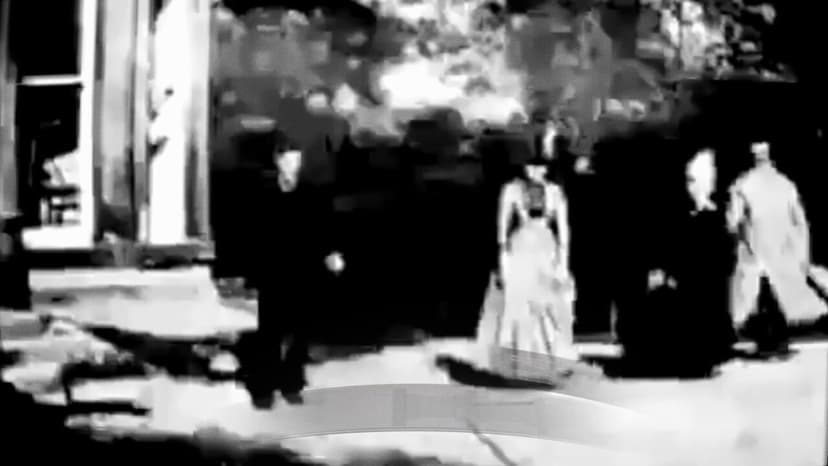
In 1888, moving images were born. Decades to reach everyone, a camera in every pocket. Now your imagination is the only limit.
Seedance 2.0 on Higgsfield, built to excel at cinematic, commercial, cartoon, and 3D CGI. 🎁 Hidden in our timeline. Available everywhere except the US
See the full numbers on the launch page →
Drop by drop
Every figure below is from the client's own posts. Engagement columns are replies, reposts, and likes.
 Seedance 2.0 on Higgsfield
 Grok Imagine × Seedance 2.0
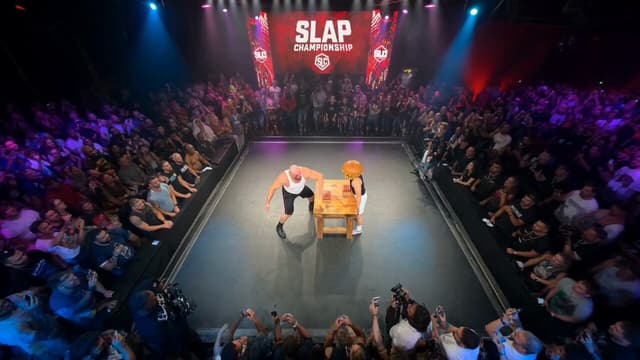 Higgsfield MCP for Claude
 Virality Predictor
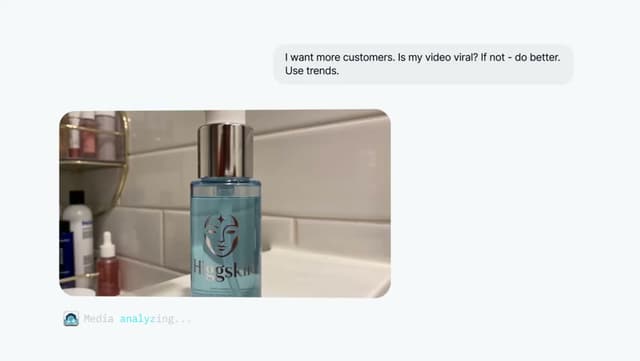 Higgsfield Supercomputer
 Premiere Pro and After Effects plugins
| Date | Release | Views | Replies | Reposts | Likes |
|---|---|---|---|---|---|
| Apr 4 | Seedance 2.0 on Higgsfield | 14.7M | 588 | 120 | 1.6K |
| Apr 8 | Grok Imagine × Seedance 2.0 | 10.1M | 460 | 180 | 2.2K |
| May 9 | Virality Predictor | 1.9M | 352 | 781 | 4.7K |
| May 27 | Adobe Premiere Pro & After Effects plugins | 1.6M | 300 | 718 | 3.5K |
| Apr 29 | MCP connector for Claude | 1.5M | 236 | 500 | 3.2K |
| May 13 | Higgsfield Supercomputer | 1.3M | 256 | 512 | 3.4K |
How to read these numbers
The two April drops are outliers and we're not going to pretend otherwise. Seedance 2.0 was a large product moment with a striking visual asset, and the Grok Imagine pairing carried xAI's gravity alongside Higgsfield's. Between them they account for 24.8M of the 31.1M.
The floor is the more useful number. The four remaining drops were a prediction tool, an agent, an MCP connector, and a set of editor plugins.
Each landed between 1.3M and 1.9M views. A connector release normally gets a few thousand impressions and disappears into a changelog.
The engagement columns invert. The 14.7M-view Seedance post drew 1.6K likes.
The 1.9M-view Virality Predictor drew 4.7K. Seedance bought awareness across a broad audience.
Virality Predictor bought a denser conversation among people who'd actually use it. Score both on views alone and you'd write the second one off.
What actually held
No single post explains the result. What the campaign produced was a floor: every release cleared 84 times a normal Higgsfield post, and the two April films broke out well past it. Later drops did no better than earlier ones, which is what the directory shows across every repeat launcher.
That's the case for treating distribution as a standing capability rather than something you buy per launch. A company shipping every two to three weeks that runs each drop cold is betting on the ranker six times a quarter. Run a consistent network and every drop clears the floor, with room for the occasional breakout.
None of this needs an existing audience to begin. The same mechanism produced 1.1M views for a founder-led launch from a personal account with 20 followers. Higgsfield shows what happens after that, once the base is warm.
Questions we get asked
How many views did the Higgsfield campaign generate?
40 million views and 1.8 million engagements across product releases between March and June 2026. The six documented drops on this page account for 31.1 million of those views on the client's own account, with the strongest single drop reaching 14.7 million.
What made the Higgsfield launches work?
Cadence and amplification rather than any single post. Higgsfield announced product weekly, and six of those releases went out through a briefed tier-one creator set posting inside the same algorithmic window. Each drop ran through the same briefed set inside the same window, so every release cleared the same floor.
Does this only work for companies with a large existing audience?
No. The same mechanism works from a standing start. One recent founder-led launch reached 1.1 million views from a personal account that had 20 followers when the work began. What Higgsfield demonstrates is the compounding case: what sustained cadence produces once the base is warm.