The launch
Codos is enterprise AI transformation software. A virtual Chief AI Officer interviews a company's employees, builds a company brain from the answers and the company's own data, and deploys automations across every function, running on the customer's own servers.
It sells to companies of 300 to 3,000 people on a 30-day pilot, with forward-deployed engineers doing the setup.
It is an a16z speedrun company. The team came from McKinsey, Meta and Tesla: co-founder and CEO Dima Khanarin was at McKinsey and then ran a foundation clearing $1B a month, CTO Gleb Sidora was a machine learning engineer at Meta, Chief AI Officer Rahul Sethuram was at Tesla and NASA, and COO Kevin Simback was at McKinsey.
On 21 September 2026 it launched on X from Khanarin's own account, which had about 1,800 followers that morning. The post passed a million views on its first day.
Doomers ran the launch. The strategy for the day, and the distribution and amplification through founders, operators and creators whose audiences overlap the people who buy enterprise software. The pickup past them was organic.
An enterprise buyer, on X
The usual objection to launching enterprise software on X is that the buyer is somewhere else. The CEO of a 2,000-person company lives on LinkedIn, the argument goes, and X belongs to developers and founders.
The directory says otherwise. Enterprise AI launches are one of the largest categories we track, and the ones that work share a shape: the founder posts, the people the buyer already trusts carry it, and the buyer meets the product through someone they follow.
The CEO is on X, reading, and following the founders and operators who post. That is who the distribution was built from.
For an enterprise product the number that matters is bookmarks. A like is a reaction. A bookmark is a buyer saving a vendor to come back to, and it is the closest thing X has to a lead.
Codos collected 2,031 of them.
What the post led with
The post opens with the category claim: the first virtual Chief AI Officer. Then the problem in one line, that AI wins every benchmark and companies still cannot find it on the P&L.
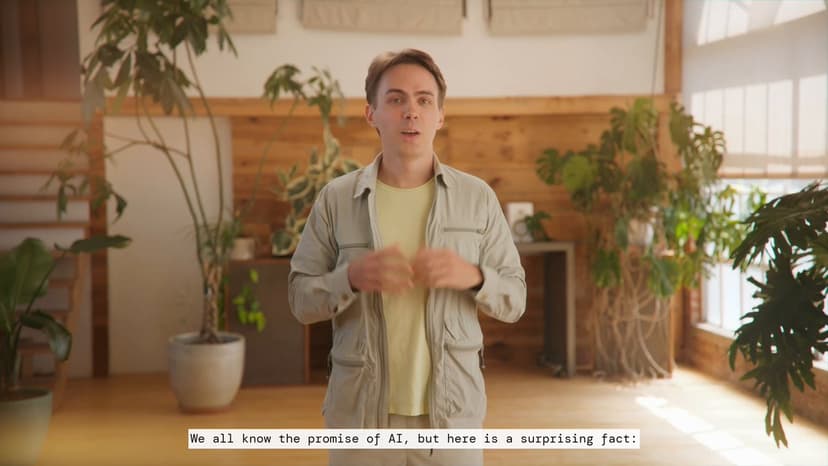
Then what the product does, in one sentence. Then the proof: customers listed on the NASDAQ and owned by private equity, adding millions to their bottom line ahead of schedule. A 73-second video shows the product running.
Nothing in it asks the reader to understand AI transformation. It names a job title every CEO already has budget for, and shows a product doing it.
That is the packaging decision that lets an enterprise launch travel past the people who already follow the category. Enterprise AI buyers covers why the category claim is the line that carries.
Distribution
An account with 1,800 followers reaches 1,800 people on its own. The rest was carried. The announcement went to founders, operators and creators matched on two things: whether their audience overlaps the enterprise buyer, and whether they engage with launches like this one on their own account.
The first hour was theirs, and it is the hour the ranking model uses to decide how far a post goes. Creator amplification is the mechanism, and the algorithm guide is why the hour matters.
The organic pickup after that is what the numbers below show. A post from 1,800 followers that reaches more than a million people has been carried most of the way by people who chose to.
The numbers
| Measure | Codos |
|---|---|
| Views on the launch post | 1,630,717 |
| Likes | 1,643 |
| Reposts | 187 |
| Bookmarks | 2,031 |
| Followers when it posted | about 1,800 |
| Reach against that following | about 900 times |
| Rank among the launches we track | 552 of 1978 |
| Saves per 10,000 views | 12.5 |
| Reposts per million views | 115 |
Read the last two rows against the directory baselines in the Q3 report: a median of 12 saves per 10,000 views and 251 reposts per million.
The save rate sits at the median, which for an enterprise vendor is the right shape: buyers keeping it. The repost rate sits below it, because a CEO saves a vendor and rarely reposts one.
The median launch from an account under 5,000 followers does 201K views. Codos did about eight times that.
The biggest a16z speedrun launch of the week, by more than the next two combined. Five speedrun companies announced between 21 and 24 September.
Codos at 1.6M did more than Space at 950K and Orbits at 410K together, from the smallest founder account of the five. How speedrun companies launch on X reads the whole cohort.
Five jobs for one post
Most launches have one job. Codos had five, on the same day, from the same post. It was raising, so investors had to see it.
It was selling, so CEOs had to see it. It was delivering for customers already in pilots, so those customers had to see their vendor in public.
It was building, so the engineers and operators it needed to hire had to see a company worth joining. And it was announcing itself for the first time, so the market had to learn the category.
The post did all five with one line each. The category claim told the market what it was.
The P&L problem spoke to the CEO. The NASDAQ and private-equity customers spoke to investors and to buyers at once.
The team's background spoke to the people it wanted to hire. And the distribution put the post in front of each of those audiences through the accounts they already follow, which is why one post from 1,800 followers could carry five jobs.
That is the reason an early-stage company launches on X at all. The investor, the buyer, the customer and the hire are on the same feed, and a launch built for all of them reaches all of them in the same hour. The funding announcement playbook covers the raise side, and how to market an AI startup the rest.
What the launch built
The founder's account went from about 1,800 followers to 3,983. The figure follows the directory and updates daily. For a company selling to CEOs from a founder's account, that is the asset: every post from here reaches an audience that did not exist on 20 September.
We got many VCs and many, many customers. We are overwhelmed. The launch was a success.
Dima Khanarin, co-founder and CEO, two weeks after the launch. The inbound is the point of launching an enterprise product from a founder account: the investors and the buyers were in the audience the post reached, and both came in on their own.
The other thing it built is the bookmark list. Two thousand people saved a post about enterprise AI transformation software, which is two thousand people who intend to come back to it. Attributing signups to a launch covers how to follow that number into the pipeline.
Codos sits in the enterprise AI directory alongside every other enterprise launch we track, so the comparison is open to anyone.
The post

Introducing Codos: The first virtual Chief AI Officer. AI is crushing all benchmarks but real companies still struggle to see P&L impact. Codos interviews employees, deploys automations across all functions and gets smarter over time while running on your own servers.
See the full numbers on the launch page →
Questions we get asked
What is Codos?
Enterprise AI transformation software: a virtual Chief AI Officer that interviews a company's employees, builds a company brain from the answers and its data, and deploys automations across every function on the company's own servers. It sells to companies of 300 to 3,000 people on a 30-day pilot.
Who is behind Codos?
Co-founder and CEO Dima Khanarin, formerly McKinsey; CTO Gleb Sidora, formerly a machine learning engineer at Meta; Chief AI Officer Rahul Sethuram, formerly Tesla and NASA; and COO Kevin Simback, formerly McKinsey. Codos is an a16z speedrun company.
How did the Codos launch do on X?
The launch post stands at 1.6M views from a founder account that had about 1,800 followers when it posted, around 900 times its following, with 2,031 bookmarks. It passed a million views on its first day. Figures update daily from the launch directory.
What did the Codos launch lead to?
Two weeks after the post, the founder's account of it was "many VCs and many, many customers. We are overwhelmed." The launch post reached executives through the founders, operators and investors they already follow, and the inbound came from both sides of that audience.
How did Codos compare with other a16z speedrun launches?
It was the biggest speedrun launch of its week and the second biggest we track. Codos stands at 1.6M views from about 1,800 followers. The next two speedrun launches that week, Space and Orbits, did 950K and 410K between them.
Did Doomers run the Codos launch?
Yes. Doomers ran the launch strategy and the distribution and amplification through founders, operators and creators whose audiences overlap the enterprise buyer. The pickup past them was organic.
Can an enterprise company launch on X?
Yes, and the directory shows enterprise AI as one of the largest launch categories. The buyer follows founders and operators, so a launch carried by those accounts reaches the CEO through someone they already trust. The number to watch is bookmarks, which is a buyer saving a vendor to come back to.